
Were You Unable to Access a Business Because You Use a Wheelchair?
Stores, restaurants, medical offices and other businesses open to the public may have legal obligations to provide equal access to people with disabilities. If you experienced an accessibility barrier in New York, tell us what happened.
BOOK A FREE CONSULTATIONAccessibility barriers can prevent people from doing everyday things.
Going out for dinner. Shopping. Visiting a medical office. Paying at a counter. Using a restroom.
For someone who uses a wheelchair, a step at an entrance, an unusable ramp, an inaccessible restroom or an improperly designed service area can become a significant barrier.
Federal, New York State and New York City laws provide protections for people with disabilities in places that serve the public. Whether a particular condition violates the law depends on the specific facts and circumstances.
TELL US WHAT HAPPENED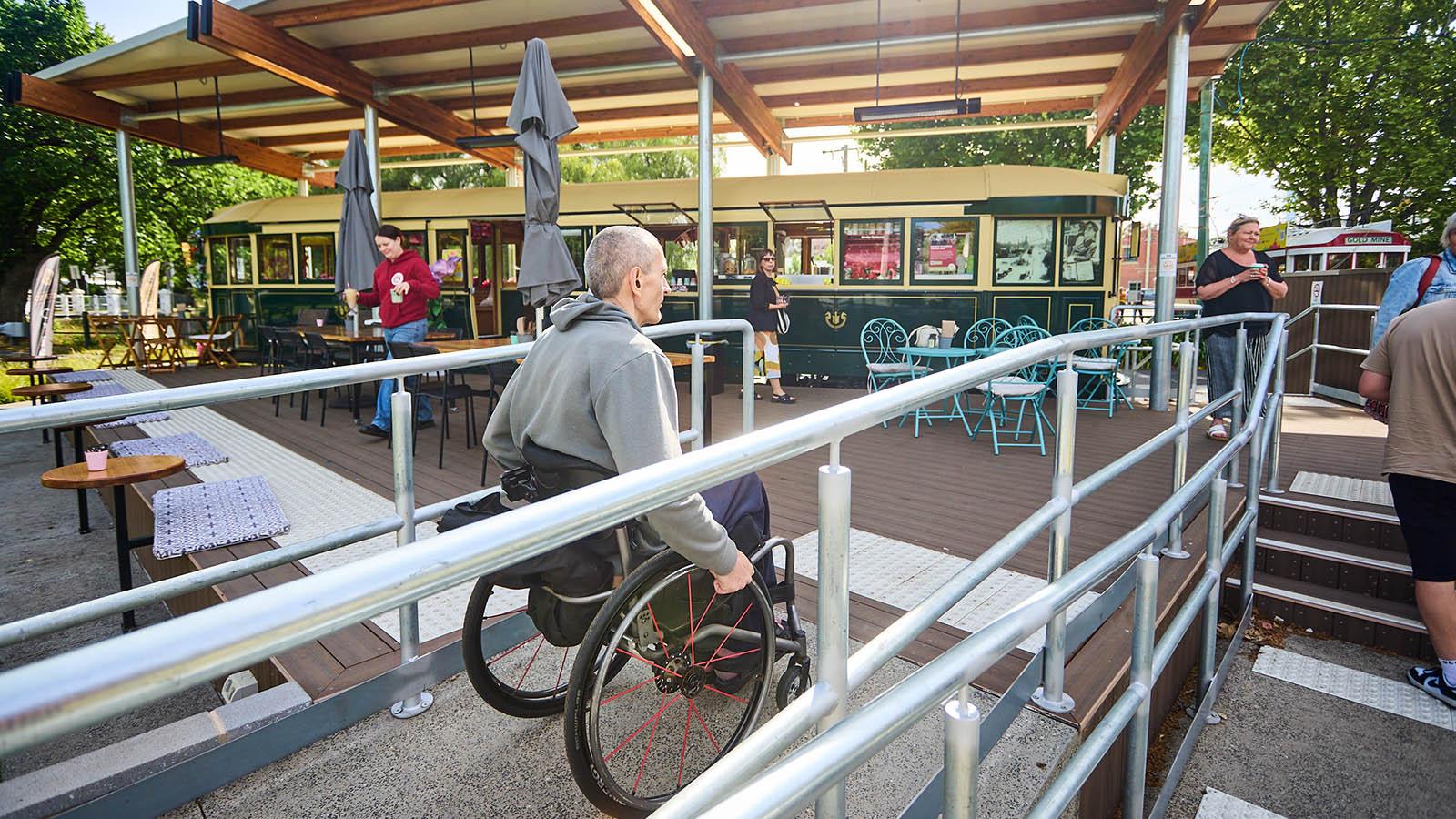
Have you experienced something like this?
Accessibility issues can take many forms. These are examples of situations that may warrant further review.
Inaccessible Entrance
Steps at the entrance with no usable accessible route, ramp or lift.
Unusable Ramp or Lift
A ramp that cannot safely be used, a blocked accessible entrance, or a wheelchair lift that is unavailable.
Inaccessible Restroom
A restroom that does not provide sufficient accessible space or features for a wheelchair user.
Narrow or Blocked Routes
Pathways, aisles or routes that prevent a wheelchair user from accessing goods or services.
Inaccessible Counters
Sales or service areas that do not provide an accessible portion for customers who use wheelchairs.
Inaccessible Seating
Restaurants or other establishments that do not provide appropriate accessible seating or space.
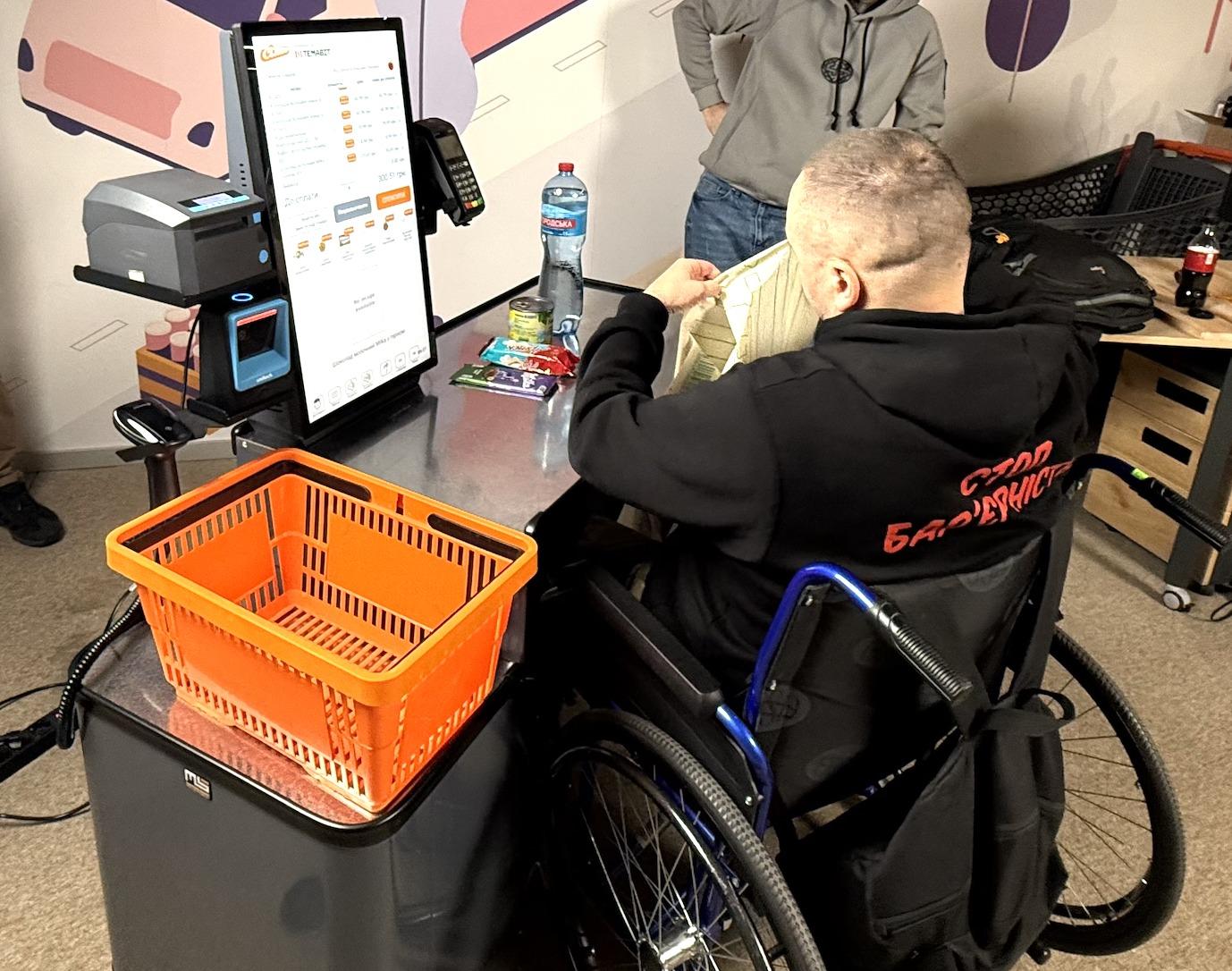
Even the checkout counter can matter.
Accessibility does not necessarily stop at the front door. Federal accessibility standards address sales and service counters, accessible routes, ramps, restroom facilities and other features of facilities covered by the ADA.
Under the 2010 ADA Standards, qualifying sales and service counters generally require an accessible portion no higher than 36 inches, with additional requirements depending on whether the approach is parallel or forward.
Whether those standards apply to a particular business, building or condition requires an individual review.
BOOK A FREE CONSULTATIONNew York law protects access to public accommodations.
Americans with Disabilities Act
Title III of the ADA prohibits disability discrimination by covered places of public accommodation and includes accessibility and barrier-removal requirements.
New York State Human Rights Law
New York State law prohibits disability discrimination in places of public accommodation and provides protections involving access to goods, services, facilities and privileges.
New York City Human Rights Law
In New York City, places of public accommodation may be required to provide reasonable accommodations so people with disabilities can fully and equally access their services and facilities.
If you encountered an accessibility barrier, document what happened.
Remember the location.
Keep the name and address of the restaurant, store, medical office or other business.
Document the barrier.
If appropriate and lawful, keep photos or videos showing the accessibility problem you personally encountered.
Tell us what happened.
Schedule a consultation so our legal team can review the circumstances and determine whether we may be able to help.
Wheelchair Accessibility in New York
Do New York businesses have to be accessible to wheelchair users?
Federal, New York State and New York City laws can impose accessibility and reasonable-accommodation obligations on businesses and other places open to the public. The exact requirements depend on the business, facility and circumstances.
Does every business have to install a wheelchair ramp?
Not necessarily. Accessibility requirements are fact-specific. Factors can include the type and age of the facility, the nature of the barrier, available alternatives and whether particular modifications are readily achievable or would create an undue hardship. An attorney can review the specific situation.
Are store and restaurant counters required to be wheelchair accessible?
ADA accessibility standards contain requirements for certain sales and service counters. For qualifying counters, the standards generally require an accessible portion no higher than 36 inches, along with clear floor space and other specifications depending on the type of approach.
What if I could enter the restaurant but could not use the restroom?
Restroom accessibility can be part of an accessibility evaluation. ADA standards include requirements concerning wheelchair-accessible toilet rooms, maneuvering space, toilet compartments, grab bars and other features. Whether a particular restroom is legally required to meet specific standards depends on the circumstances.
What if the business has a ramp, but I cannot safely use it?
Simply having a ramp does not necessarily resolve every accessibility issue. ADA standards address features such as ramp slope, width, landings and other specifications. The particular location should be evaluated individually.
What kinds of businesses are considered public accommodations?
Depending on the applicable law, public accommodations can include restaurants, retail stores, hotels, theaters, medical offices, gyms, shopping centers, salons and many other businesses and facilities that provide goods or services to the public.
What information should I have when I contact the firm?
It is helpful to know the business name and location, approximately when the incident occurred, what accessibility barrier you encountered, whether you asked anyone at the business for assistance, what happened afterward, and whether you have relevant photographs or videos.
Does contacting the firm mean I have a case?
No. Every situation is different. A consultation allows the legal team to review the circumstances and determine whether the firm can assist you.
Did an accessibility barrier prevent you from fully using a business?
Tell us what happened. Schedule a free consultation with Naydenskiy Law Firm and let our legal team review your situation.
BOOK A FREE CONSULTATIONATTORNEY ADVERTISING. Prior results do not guarantee a similar outcome. The information on this page is provided for general informational purposes only and does not constitute legal advice. Viewing this page, submitting information, or scheduling a consultation does not create an attorney-client relationship. Every matter is different and must be evaluated based on its individual facts and circumstances.